
What are the common types of Milk Pasteurization and explain some benefits of this process?

Back in 1880, Louis Pasteur, a French scientist, found that heating any food could kill or eliminate undesired micro-organisms and prevent edibles from becoming ruined. After that moment, pasteurization has become a luxury for people when it comes to preserving food. In order to increase the commodity shelf life, many broad companies use pasteurization. Manufacturers such as food, dairy products, and beverage utilize large-scale pasteurization to ensure that goods satisfy consumer health and food safety criteria. Milking machines and dairy equipment are valuable to offer you good quality dairy products. Similarly, pasteurization is also done to provide you quality dairy products. Types of Pasteurization: Pasteurization is now classified into three broad categories: High-Temperature Short Time (HTST) Also known as Flash pasteurization, this process is the most common method for preserving milk. Milk is then heated for 15 seconds to any pathogenic bacteria at temperatures of around 170° F and above if required. For this process, pasteurized milk must be consumed for reasonable and healthy use within one to three days. Ultra-Pasteurization This pasteurization method is used for every milk brand which requires a hygiene or packaging shelf-life of up to one week. This ensures that milk is the easiest and most efficient way to sustain milk at temperatures between 220°F and 230°F within a matter of seconds. Vat Pasteurization It is the fastest and most costly way of pasteurizing milk. The milk is heated in a vat for 30 minutes to around 160 ° F and then cooled to a temperature of 40 ° F. It is the safest way to consume unhealthy and unprocessed, fresh milk. The raw milk is preserved and circulated in either of the above pasteurization processes, preferably before consumption in the cold chain at 4 ° C. The pasteurizing method guarantees that the milk is healthy for longer use. This is why pasteurized packaged milk is popular with most consumers. Milk Pasteurization Benefits. Milk heating before packing will have several benefits for us to destroy the bacteria that are present: Reduced chance of disease: The pasteurization method destroys much of the harmful milk bacteria. The risks of illness decline after the intake of this type of milk. Better nutritious value: Because pasteurization destroys bacteria contained in raw milk, milk-based nutrients become accessible to anybody who drinks milk. Increased use: Pasteurization not only serves to eliminate toxic microorganisms from fresh milk but also to retain the processed milk for a longer period of time and allow it usable for consumer use. Yes, milk pasteurization offers you quality products that are beneficial for your overall health.
How can a modern and improved mild testing machine help the Milk industry?
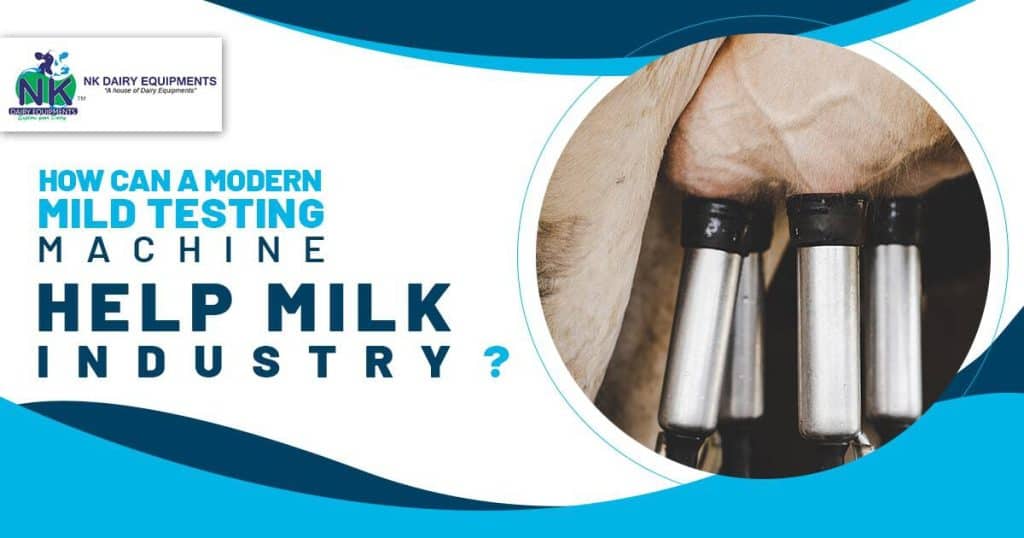
Milk is considered as the main source for the body to have the essential nutrients especially calcium. This is important for the body to make it strong. India is a country that is more reliant on agriculture as compared to any other industry. It has been more than 70 years and still, the agriculture sector is given the main priority along with dairy farming. With time, the milk production is also increasing as the technology is improving and getting better with time. The milk plant in India contains modern technology and techniques to do dairy farming which benefits their business in a great manner. The journey of the Dairy Industry In the starting stage, the results of the dairy industry were rough but with time the whole scenario changed. But have you ever thought how the imperfect journey of the dairy industry changed into a successful one? All this credit goes to the latest technology machines like milk testing and fat measuring machines which check the graveness to the white industry. The entire scenario changed the perspective of the dairy business in India. With time, it has now become the introduction of technologies and improved techniques which helped to intensify the milk quality and it was guaranteed for fair proceedings. With milk testing equipment and ultrasonic milk analyzer testing equipment has been revolutionized and the milk quality has been improved. How fat measuring and ultrasonic milk analyzer changed the process? Earlier, when questions were asked for checking the milk quality, there was not a specific answer to that. The milk contamination and low quality signified the need for advancement. When modern technology came into the market, complete results were changed and it resulted in a positive side. An ultrasonic milk analyzer is a machine that helps to measure the milk FAT & SNF and checks water proportion which checks the milk density. With the Fatomatic farmers had the help to calculate the milk fat. It helps to check the milk measurement along with calculating fat content in the milk. What are the features of the best milk testing machine? Ultrasonic Milk Analyzer Calculates Fat content The machine checks the presence of milk fat content. The measurement scale varies as per the variation which can occur in the milk type. Milk Solid Non-Fat (SNF) The machine helps to measure the SNF content in milk. The milk-fat testing equipment gives correct data of Solid non-fat in the milk. Water Proportion These machines check the water amount in the milk. It helps to check the water content in the milk which is between 0 percent to 60 percent. Milk Density The machine tells about the actual milk density which is based on the milk variations. Smooth Operation Using this machine is easy and smooth. Additionally, the set-up is extremely smooth along with cleaning and doing all the important work.
Why do India’s largest dairy farmers purchase GEA’s first butter-making machine?
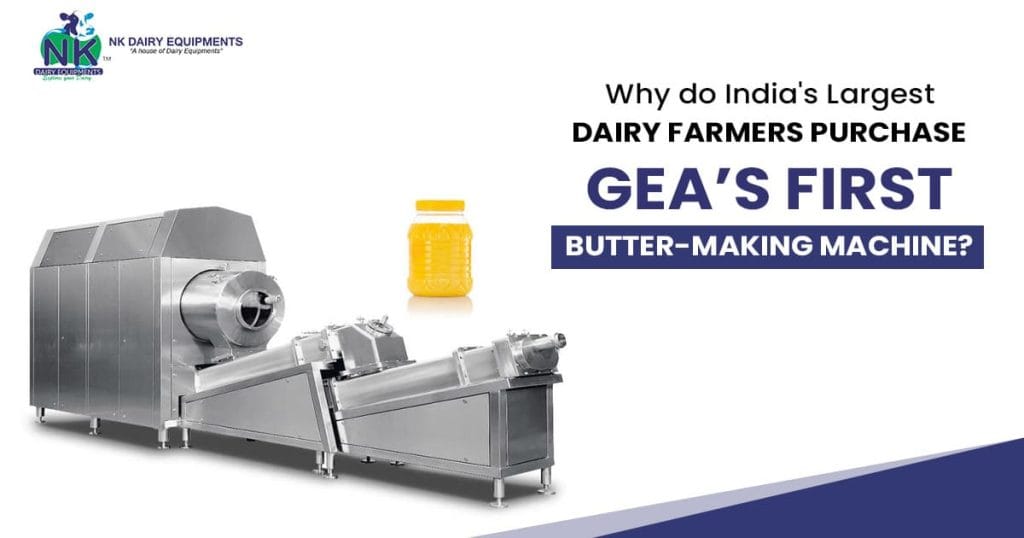
With the advancement in technology, the dairy business is growing day-by-day. Several farmers start doing dairy business because of the high demand for milking products. Dairy plants include several machines such as ghee plant, butter churner, milking parlor, and so on. In this article, we are going to give you information on the butter churner. The system is designed in conjunction with Fritz processes to proceed to make butter from sweet or sour cream. The butter made in this unit fits the high demands for food. The three liquid additives dosing method enables lactic or salted butter to be made, along with the honey and sour cream oil. The development of butter This cream is correctly heated and choked to butter in cylinder 1 at a steady temperature. In-cylinder 2, the granules are refrozen in a cold buttermilk bath prior to the conglomeration butter lumps being removed from the buttermilk. The butter is kneaded to remove some of the buttermilk in textured 1. Then sugar, buttermilk, cheese, salt, or other liquids may be dosed and all ingredients are equally mixed together with a multiple-stage mixer. The air is drained from the vacuum container. The butter is vigorously kneaded and combined once again in the textured 2 and maintains a steady discharge with the incorporated butter device. We are committed to the production, procurement, and export of butter machines. The Butter Making Unit is constructed of high-quality SS 304 steel and guarantees sturdy design and corrosion resistance. We sell our products all over India, several dairy farmers get benefits from GEA milk making, ghee making, and butter making machines. Largest dairy milking units purchase butter making machines. Yes, it is true that the Largest Indian dairy producer has purchased GEA’s first Model BUE butter-making machine. In February 2019, the BUE 6000 System and all associated hardware will be introduced. A company that purchased Gea’s first butter making machine is Creamy Foods Ltd. It is one of the largest international ghee producers that is used in Indian households as the main food ingredient. They revealed in an interview that GEA machinery would make it possible to meet the highest global quality levels to produce quality ghee and other milk fat goods to serve people well. Key features: The cream storage tank is built of content SS 304, requiring less repair. Use a window for viewing on the other hand such as sight glass is used to view on the opposite side. Interior end sprayed with sand Iron Angel Powdered foundation structure Features: User-friendliness Easy to use High durability or Strong resistance Lightweight and compact architecture Low maintenance Minimum labor cost Robust construction Smooth operation Specifications: Electric motor supply
Things you need to keep in mind if you want to establish Small Scale Milk Business?
If you are planning to operate a dairy farm and never had it before, you will probably want to reach out to experts and get some feedback so you can decide whether it would be a viable choice for you or not.
How to start and run a milk processing plant effectively and on-time?

The milk plant is the place where milk needs to be collected, processed, stored, pasteurized, packaged, and prepared for supply. The milk processing plant needs to have a license. In this license, the milk processing plant may prefer to process the milk and milk products.
Why are milk processing plants necessary and how do milk processing plants work?

In this article, we are going to tell you everything about milk processing plants such as the capacity and working of the dairy plants.
Dairy farming: Do you want to start a Milk Processing Unit business?

India is expected to have an annual demand of 250 million tonnes of milk per year by 2022. Here are some other things that you need to keep in mind before establishing the Milk Processing Unit business.
How is Milk Pasteurizers helpful in keeping Milk Fresh?

Dairy business is growing with the help of advanced dairy machines and technologies. If you are planning to start this business, then you need to read this article at the end, because we are going to tell you each and everything about the milking process. We also tell you how pasteurization works to keep milk fresh. Milk is one of the most drinking liquids across. And we have a lot of milk to make sure we don’t face a shortage, no matter that we live in a world of many people suffering from hunger. With the help of modern and advanced agricultural machinery, food is provided in abundance for the citizens of the country. All these approaches are helpful to make quality milk and other milk products too, as these are valuable to improve the health of consumers. All the dairy machines are worked properly to make healthy products, well, not only healthy, you will find flavored products these days. So that you can enjoy consuming them well. Dairy plants include several machines but in this article, we are going to talk about pasteurization of milk. Let’s understand how pasteurization is valuable to keep milk fresh all the time. What is Pasteurization? Milk Pasteurization is a process of heating raw milk at the high flame in order to kill all harmful microorganisms including-: Viruses Bacteria Other pathogens. Originally developed by Louis Pasteur in 1864 to avoid the spoiling of wines, this process is commonly used around the world to increase the consistency of food products. Additionally, pasteurization is completely a natural and well-tested method, which is useful to turn raw milk into pasteurized milk so that people can simply enjoy it. Purposes of Using a Milk Pasteurizer Two main roles of a pasteurizer for milk include-: It kills any bacteria or other microorganisms that cause illness to ensure the health of the consumer’s milk. Pasteurization of milk is also useful to improve the consistency of milk by removing micro-organisms and toxic enzymes from raw milk. This is beneficial for the consistency and shelf life of the milk. It means that the customer gets fresh milk or other dairy products. Ways to pasteurize milk Milk pasteurization kills all pathogenic bacteria that cause milk souring. This process usually focuses on keeping milk fresh all the time also, raises the shelf-life of milk, and strengthens environmental health. Pasteurization destroys all big dangerous bacteria and microorganisms such as-: Salmonella Yersinia Staphylococcus Listeria Campylobacter E. Coli Brucella This process is useful to avoid infections such as scarlet fever and diphtheria, and also strengthens the immune systems. If you are running a dairy business, then you need to understand the importance of this process.
How milk processing machines help in reducing labor charge and improve efficiency?

Dairy business is becoming more popular these days, because of the rise in demand for dairy products. If you are planning to start a new dairy business, then you need to go with quality milk processing units. These are useful to increase efficiency and reduce labor costs. And you will be able to improve the quality of milk and other products. Dairy farming is growing too much these days as it has several new technologies as well as expert dairy farmers. These days all the dairy farmers perform all the dairy farm works with the help of the best techniques and milk processing plants for quality milk products. You will find several milk machines and equipments, which help farmers to increase milk production. If you are also planning to start a new dairy business, then you need to go with new and advanced dairy equipments to get more profit. You will find several new techniques to improve the quality of milk and other dairy products including-: Milk pasteurizers Milk blending Homogenizers Milk receiving tanks Milk separators Milk fillers Dairy products packaging machine. With the help of these milk processing equipments, you will be able to reduce the need for human labor. These techniques do not require any type of human labor for milk processing or making dairy products. Milk processing equipment Milk Homogenizer is the most popular dairy equipment that is used in dairy farming. Homogenizers are useful for the homogenization of a range of material including food, plant, tissue, and soil. This equipment is beneficial to improve the quality of the milk and other products that are made from milk. After this, separation is done to separate the milk and cream, and separated cream is then used to make ghee and butter. Pasteurization is performed to kill harmful bacteria from the milk to increase efficiency. This is one of the best milk processing equipments, which will give you quality products. Reduce the labor charges As we stated above, a milk processing plant is helpful to reduce the labor cost, because it does not need humans to perform dairy works. These are also called robotic machines and automatic milking units. In this way, you will be able to save more money by reducing the need for human labor. Increase efficiency All the milk processing equipment is worked automatically and these are valuable to increase the frequency of milking. With these machines, dairy farmers get a lot of free time to perform other dairy farm works such as the management of animals. Using robotic machines is helpful to increase efficiency and improve the quality of milk. You can simply make any type of dairy product with these machines.
Basics of milk Processing

Milk processing is one of the important parts of the dairy business. There are different methods included in this part which help to get the best quality milk. Additionally, the use of the latest techniques and methods in milk processing makes everything better. This guide will give you a better understanding of the milk processing basics. Introduction Milk is the nutritious beverage consumed by individuals of different age groups all over the world. Before the milk is delivered for the final consumption, it is processed. Milk processing is one of the major parts of the dairy sector. During processing, the fat content is adjusted, essential vitamins are added, and harmful bacteria are killed. With time, the milk processing machine has become effective which increases milk production. Given below are different processes which will be carried out in the milk processing plant: Production process Milk production is an integral part of the dairy business. Milk is collected from the dairy farmers and then transported for the production process. When everything is done the milk and other dairy products are collected to send to the end-consumer. Milk treatment sections Once the milk is collected, it is transported by tanks to different processing plants. Milk is pumped from the large tanks to the treatment units to test the milk. After testing the milk, it is cooled and then further steps are done to store it correctly. Sterilization The sterilization process is necessary to remove the bacteria from the milk which is not safe for consumption. Pasteurization With the pasteurization process, the milk is treated at a higher temperature and then brought back to normal temperature. The process effectively reduces the microbial presence. But, without compromising the essential qualities of the milk. Standardization & Cream separation method The fat content depends on the type of cow, cow feeding, and many other processes. To keep up with the milk consistency the pasteurization or sterilization is essential. The cream separation method separates the cream from the milk and skimmed milk by using the cream separator. Mixing process Milk nutritious value is improved with vitamins, calcium, and other ingredients. In the mixing process, everything is mixed and blended in various mixing units. Homogenization method The process of homogenization is done through homogenizers. This method checks the cream and separates it from the milk where milk needs to be stored. Milk filling and packaging method Once all the steps are done the milk is sent for the filling and packaging. Milk and dairy products can be packed in different packaging like pouches, glass, cartons, and PET bottles. With the right type of packaging the shelf-life and need & demand of the dairy product increase. If you want to learn more about the processes and what type of machinery is best then talk to our dairy exports.